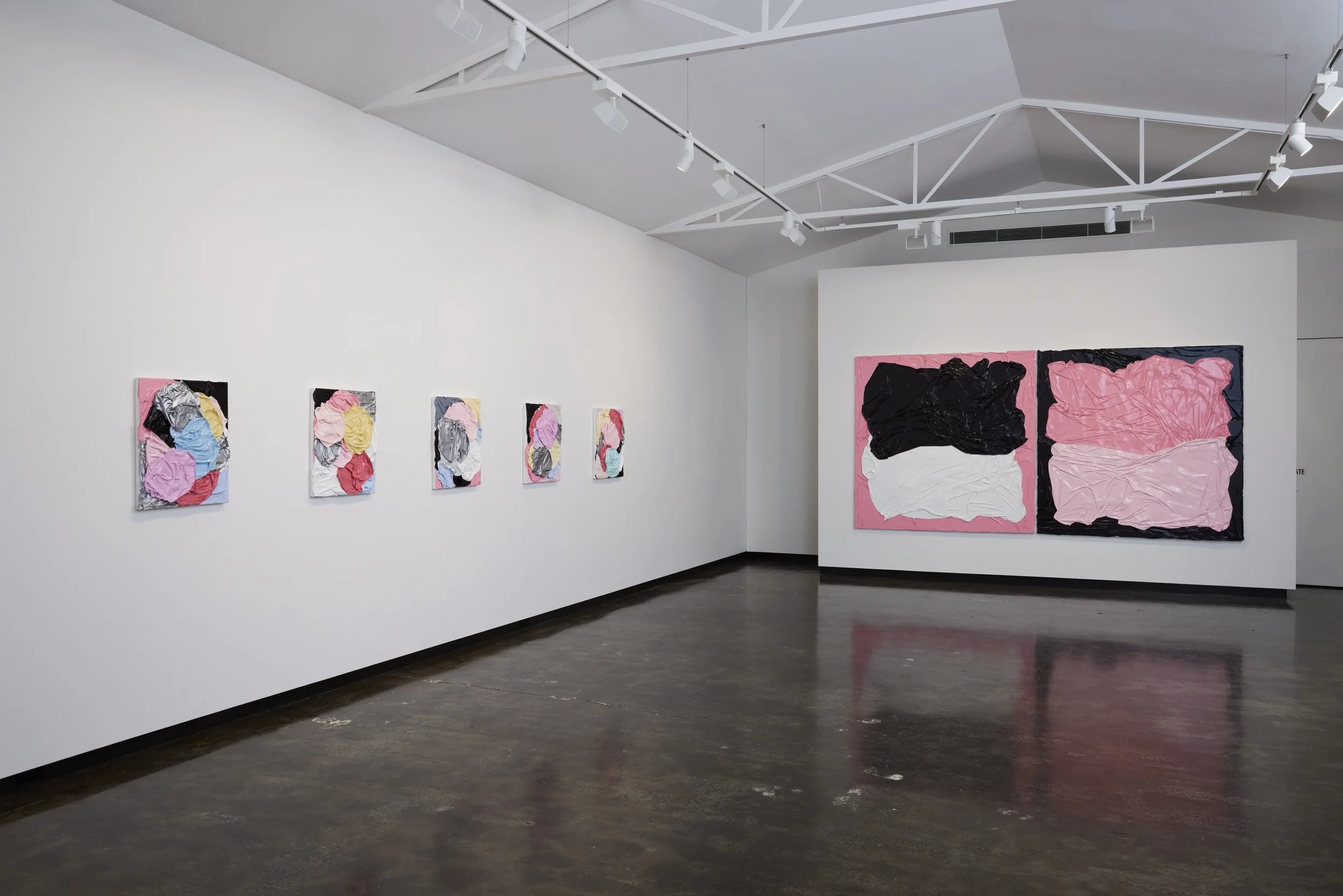
Colour Chronicles - Sophie Gannon Gallery 2026
For or via painting?
I’ve always been critical of painting’s ‘absorbency’, by which I mean the preservation of its identity through an encompassing expansion into other fields. (Capitalism prevails because of its similarly effective and affective absorbency of even those projects that seek to dismantle it). Prints, sculptures, and videos are often described as ‘painterly’ or belonging to the ‘expanded field of painting’, which, as I see it, only functions to limit, if not negate, our understanding of what we encounter. The broader category of art functions in a similar way. Forgetting artworks as ‘art’ potentially brings us closer to their ‘truth’, opening us to much deeper engagements. When painting ‘absorbs’ an evolution or process unconventional to its existing apparatus, does it simply expand, or does it mutate?
Huseyin Sami’s practice has pivoted almost entirely on this question for nearly 30 years. Starting like many painting students do with the ironic pursuit of what the medium hasn’t been or isn’t, he has constantly applied paint and painting techniques unconventionally since his days at Sydney College of the Arts in the 1990s. The result is a repertoire of deliberately arduous painting processes now characteristic of his work, asking: Are we still left with painting? When, if ever, do ‘unconventional’ applications become conventional? And what might we make of the resulting painting mutants? But the question that looms largest for me, having known Sami and his work for 10 years, is this: Is his practice really concerned with testing the limits of painting, or has painting always just been a vehicle? Is his work for or via painting?
In an interview with Sami in 2022, I asked why painting remains important to him, to which he replied that it is one of the first things we learn to do as children. It’s true (generally), painting is one of the first complex technologies we grasp in infancy. Yet, I wonder what to make of all those sandcastles I built that weren’t framed as sculpture or architecture. To properly consider this privileging independence of painting requires us to think about differences between the mundane activity of painting and painting in art, which is precisely what Sami’s work does. Having always used housepaint, he brings the canon of painting into direct conversation with practical painting. If all sculpting isn’t sculpture, then maybe not all uses of paint are painting. It’s more specific to say that Sami interprets the (Western) discipline of painting, not to make paintings, but as a material means by which to explore potentiality and thresholds, both physical and conceptual. ‘It excites me to look at a clean canvas’, he tells me. ‘It asks, “What can I do? What can I be?”’.[1] Signalled here is a philosophical interest in mutability, in the qualities and causes of transformation. Frequently, bodies of work emerge from the residue of others, like the creation of Aphrodite from aphros[2] in Greek mythology. It’s more interesting and illuminating, as far as I’m concerned, to think of these works as sculptures made of paint and canvas, or as performance documents. Sami goes to great lengths adding unnecessary amounts of real time and space to the activity of painting. But these aren’t only part of the process (as for all artists to lesser extent); they literally constitute most of his works.
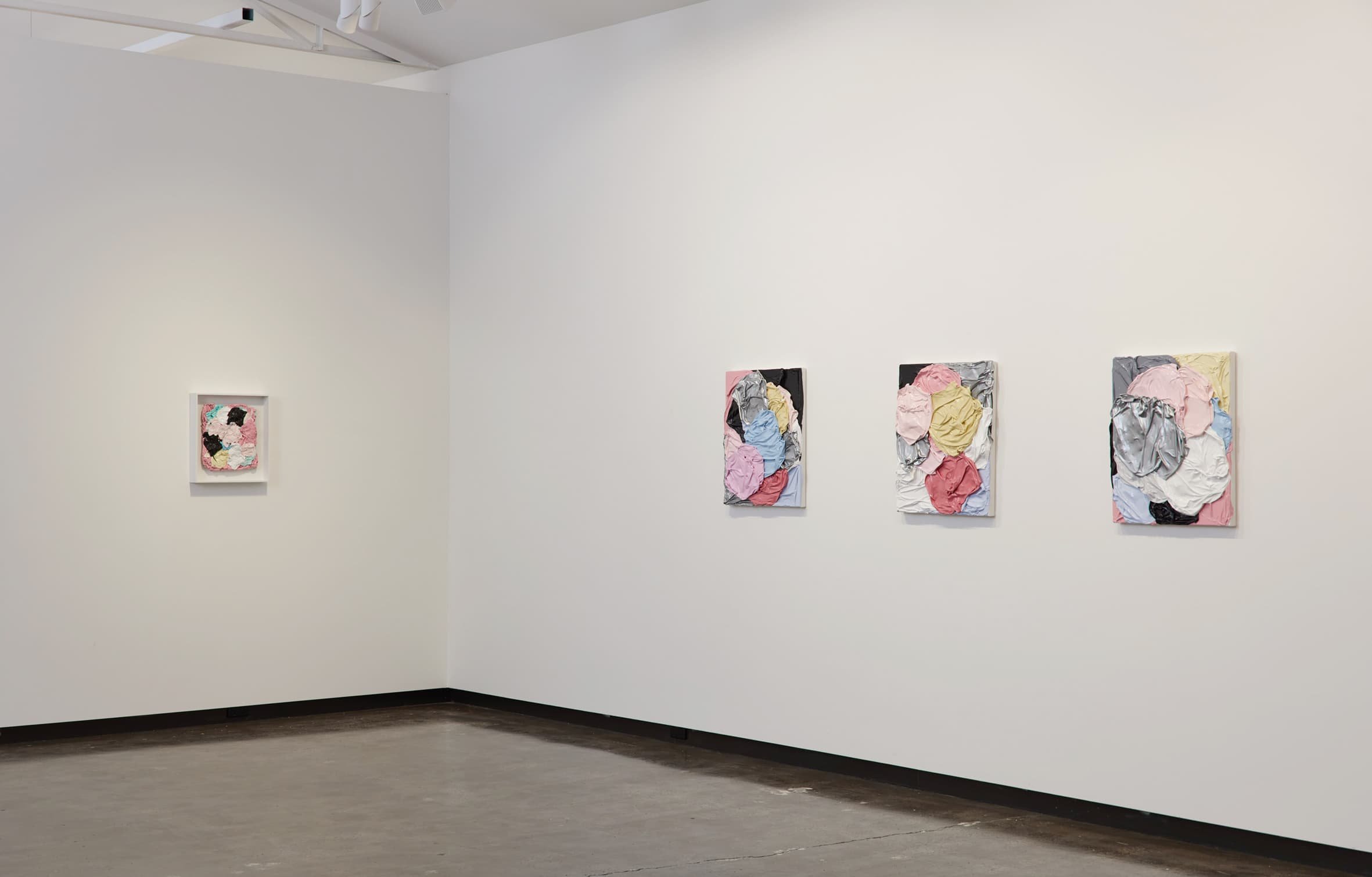
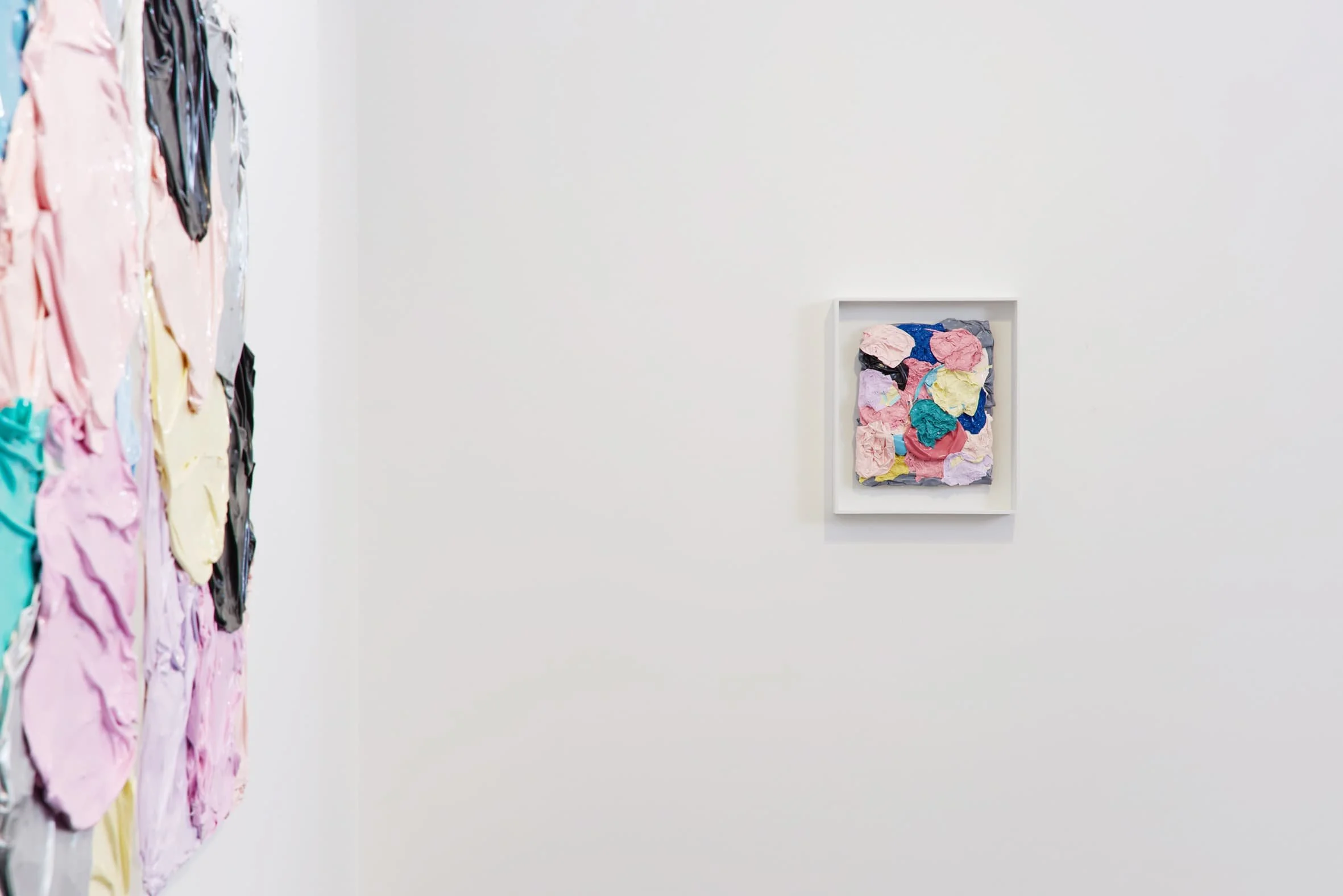
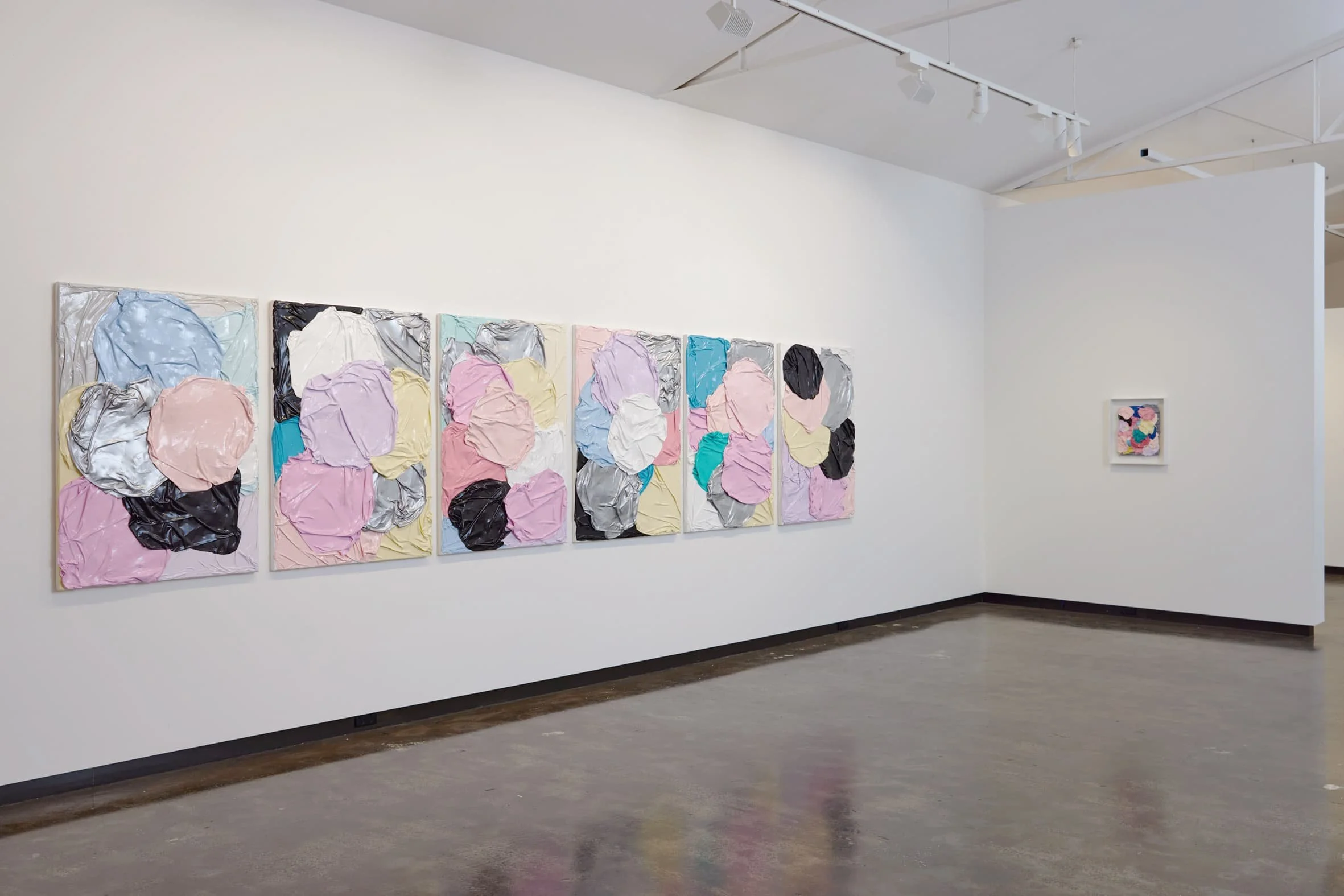
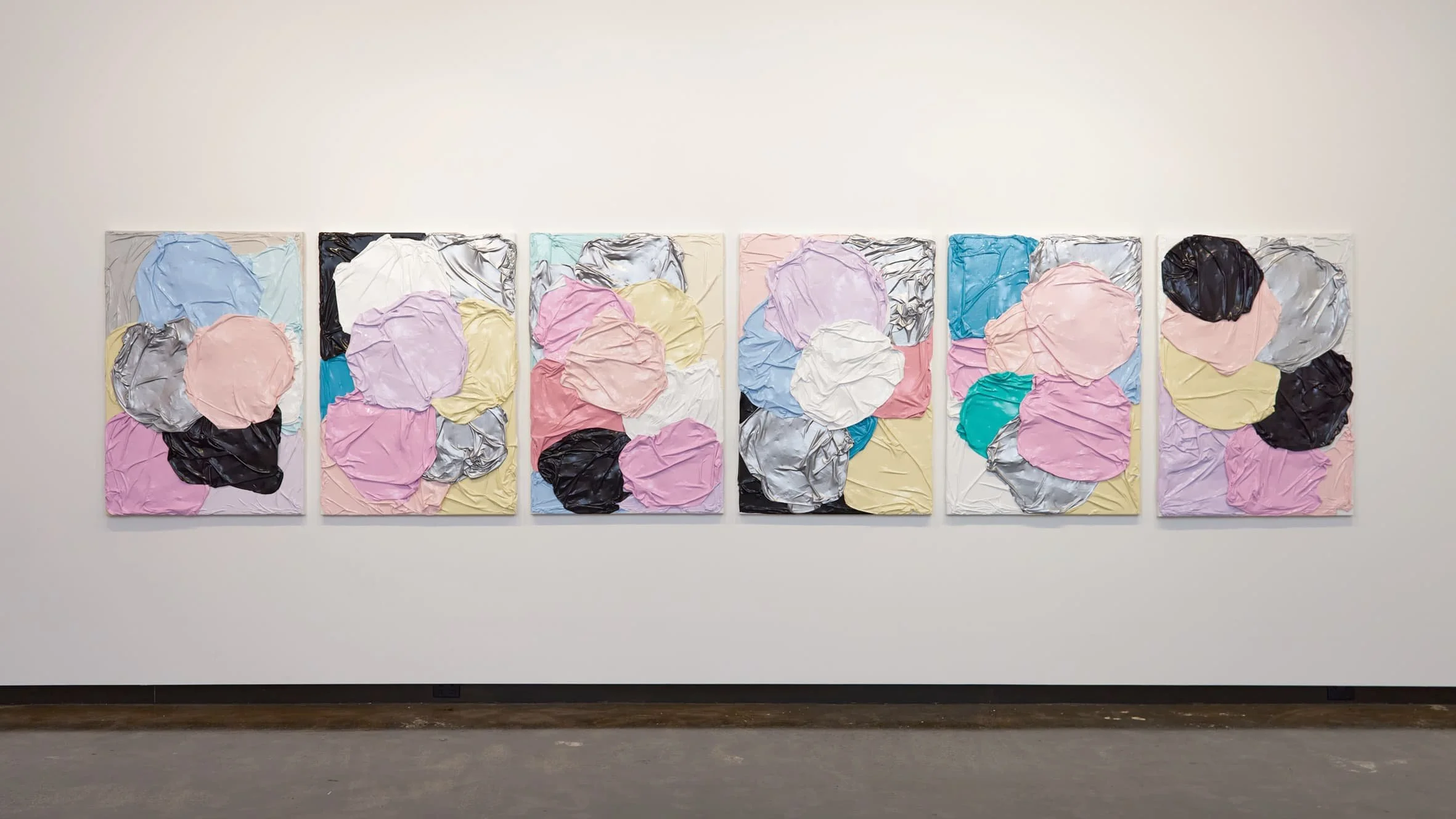
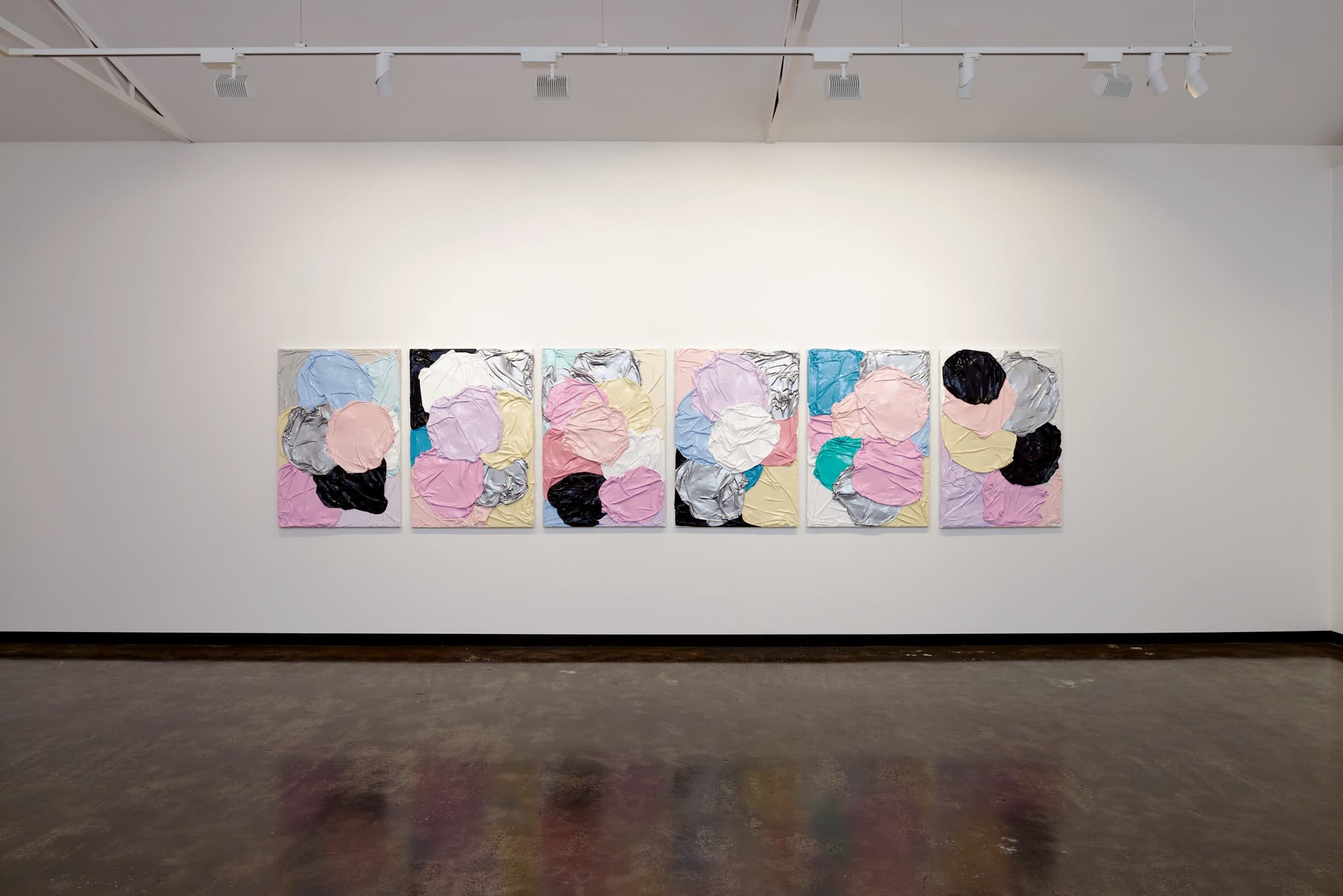
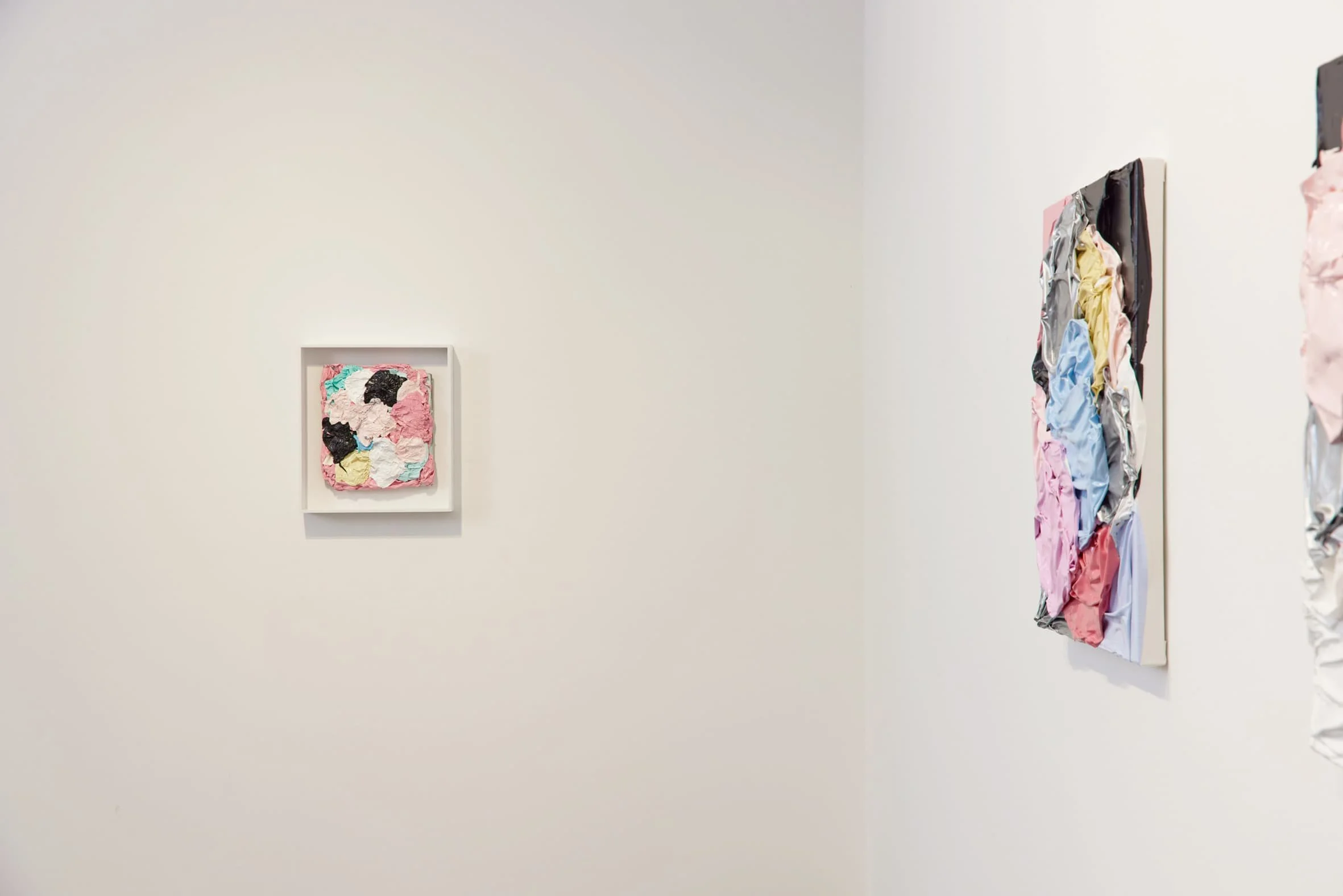
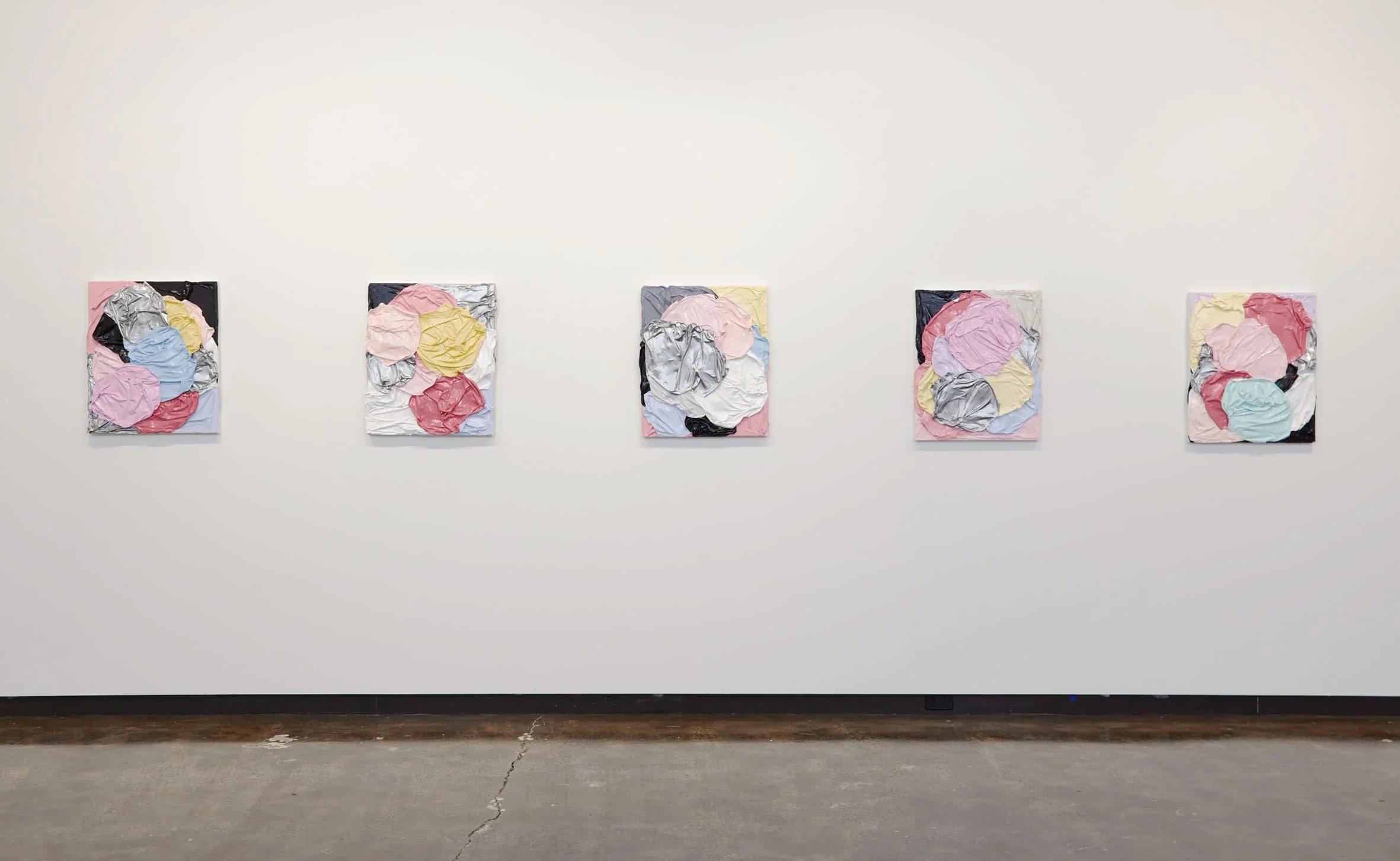
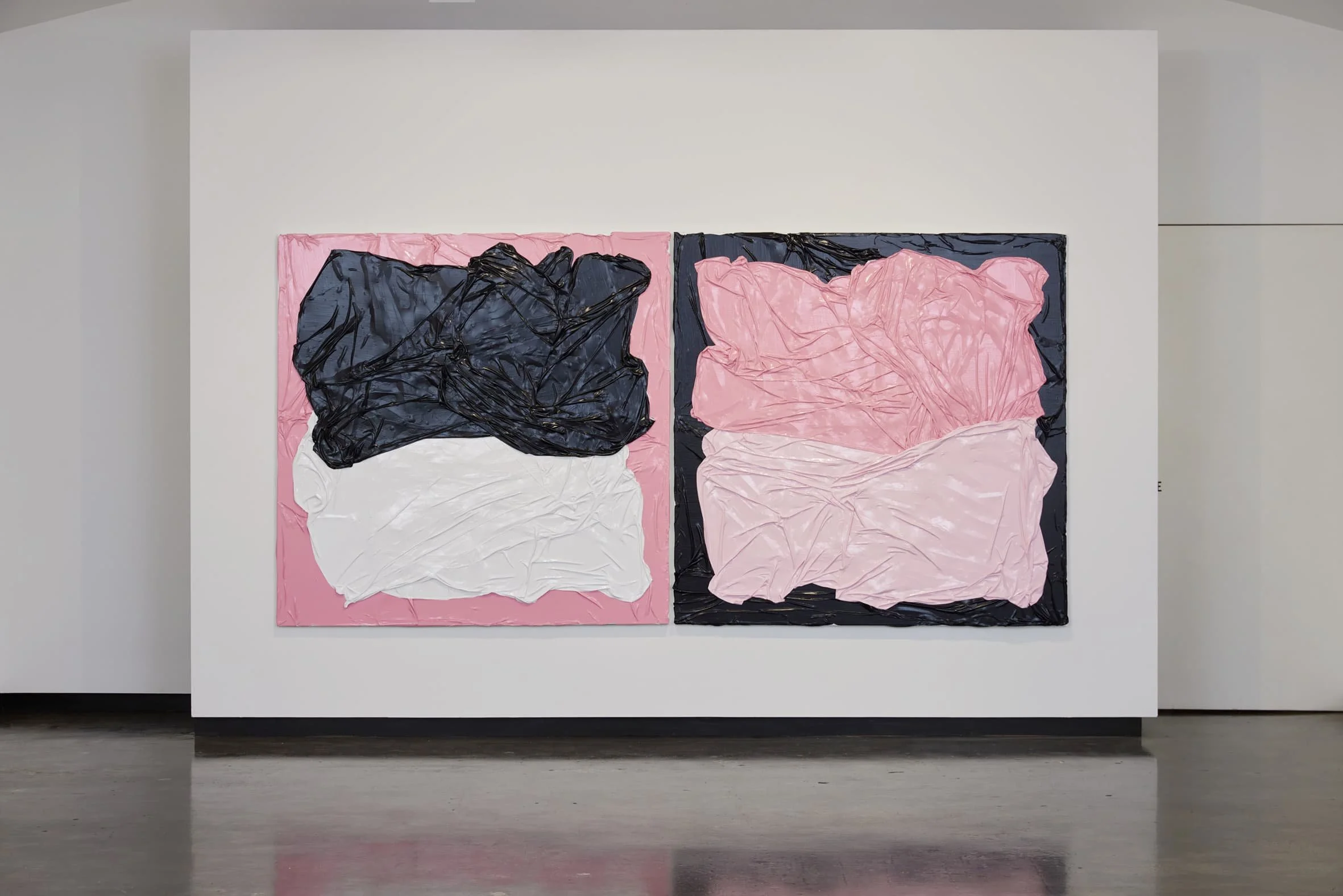
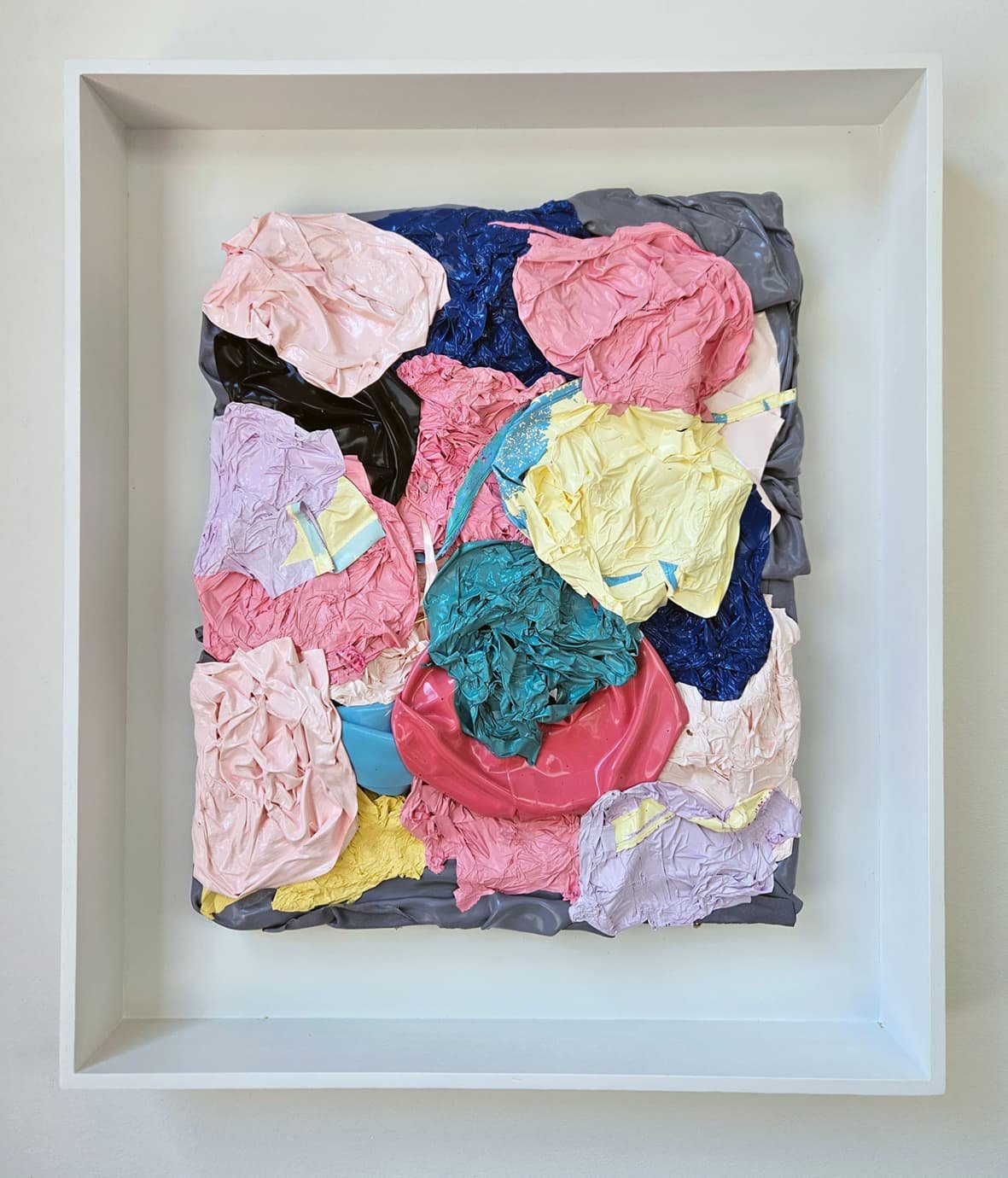
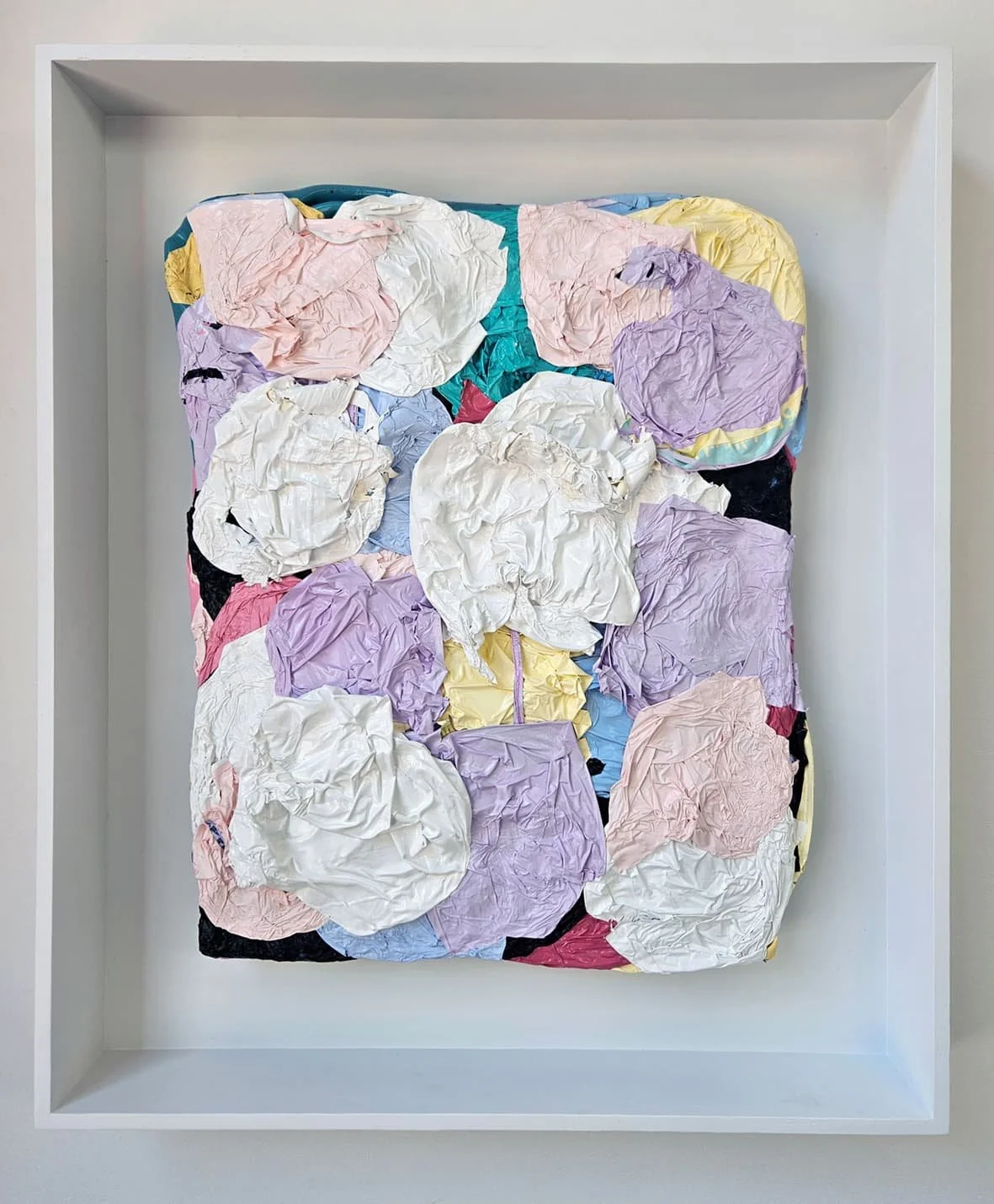
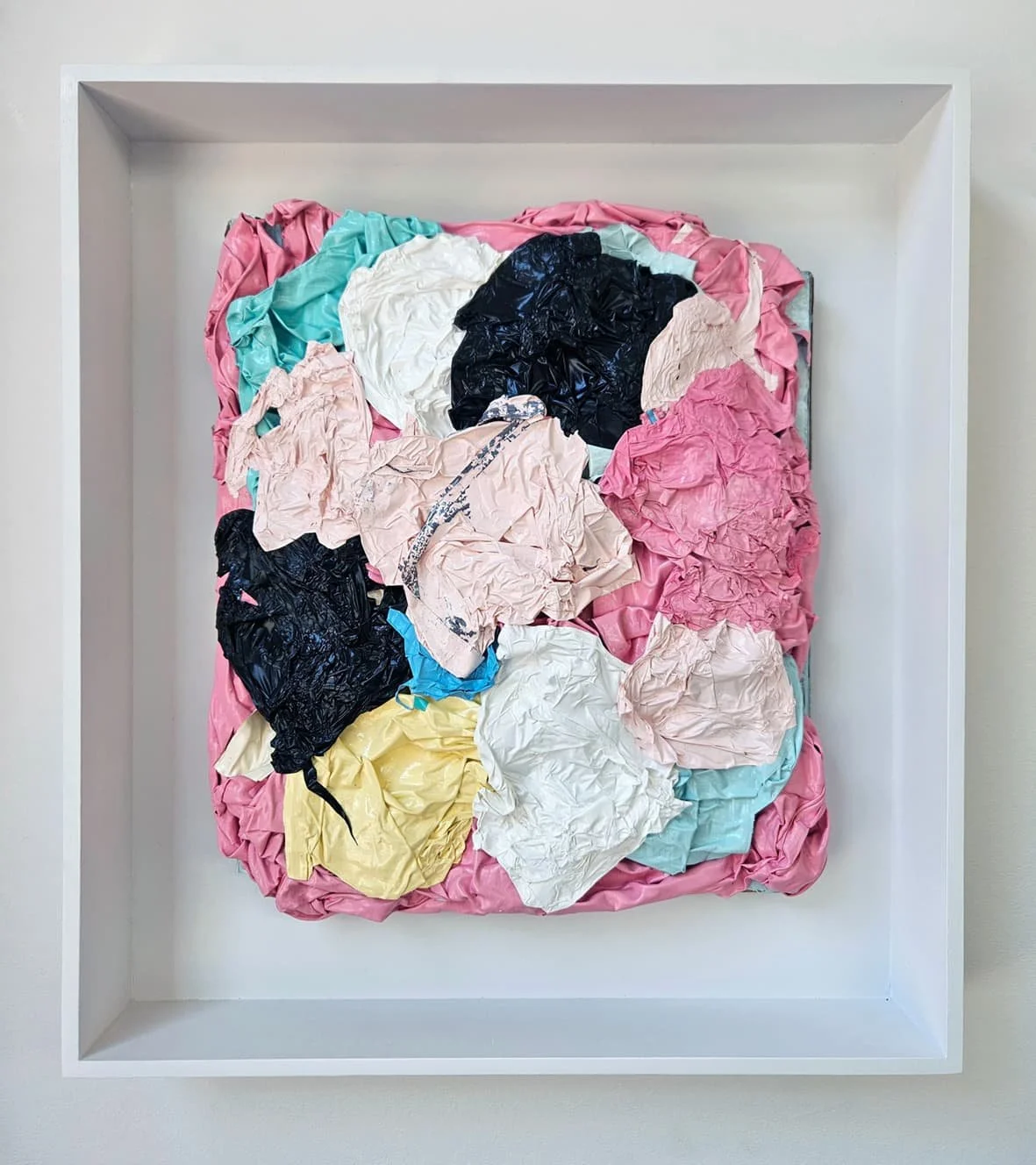
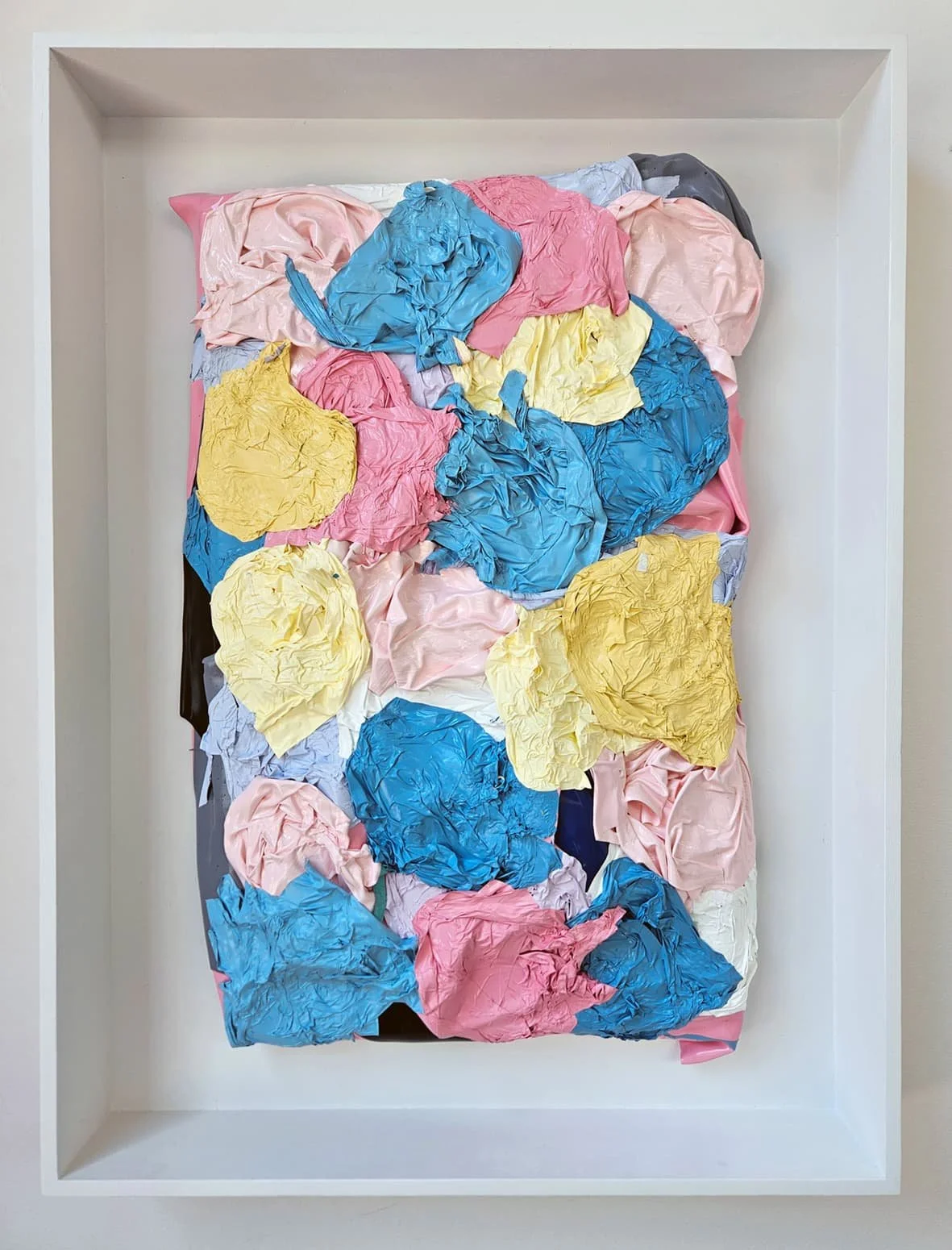
Sami has had a quieter concern for colour in his practice to date. ‘In the beginning, colour wasn’t a big consideration, but over the years it’s become more influential as I think about how we train our retinal memory.’[3] Led by the material potential of paint itself, his distinctive pastel palette (indexed comprehensively in his new suite of paintings for this exhibition, Colour Chronicles) is a practical, rather than aesthetic or symbolic choice. White-based paints enable him to produce dried sheets (which he refers to as ‘skins’) of paint that are much harder or impossible to achieve in other colours. The pastels in his compositions, in other words, are code for the chemistry of transformation integral to his work. Colour is yet another material, like paint, that Sami utilises for its alchemic potential. ‘Chronicling’ colours figuratively chronicles the span of Sami’s practice, forging historical patchworks not unlike assemblages or collages. The larger companions to these colour indexes in Colour Chronicles read as ‘rippled Rothkos’, linking us to an artist synonymous with the transcendental potential of abstraction, and to Harold Rosenberg’s orbit of Abstract Expressionists, whose canvases the critic famously viewed spatiotemporally as ‘arenas in which to act’, rather than two-dimensional pictures.
So, after nearly three decades, where have Sami’s adaptations of painting landed us? Having dried paint to form ‘skins’ for his Skin Paintings, developed hyper-extended paint brushes and bodily actions for his Performance Paintings, invented and built simple machines for his Bucket Paintings and Drip Paintings, and sliced into canvases for his Cut Paintings, has Sami expanded or mutated painting? What have his deliberately problematising additions of time, space, and energy to painting actually resulted in? Despite what the titles of his series tell us, I don’t think of Sami’s works as paintings. If, instead, we see them as sculptures or performances made with paint, we are presented with entirely different discourses in which real space and time, matter, volume, gravity, the body, motion, and sociality have stronger resonance; histories that recall more direct relationalities between our bodies and the world. I’m not suggesting that different mediums in art are mutually exclusive—far from it. For those who wish to read Sami’s work through the lens of painting, please do so. I just wonder what else there is to discover when the stuff of painting is used as modules, pedestals, or props.
Though Sami certainly wouldn’t claim any political importance in his work, his mobilising of painting’s boundaries feels hugely significant in a context defined by shifting geopolitical, ecological, and technological thresholds, which are literally shaping what it means to be alive and human.
_________________________________________________________________________
Text by James Gatt.
James Gatt (1988) is a curator and writer from Gadigal Nura Sydney currently based in Naarm Melbourne. From 2023 to 2025, he was Curator at Te Uru in Tāmaki Makaurau Auckland where he curated exhibitions including Giorgio Griffa and Peter Robinson: Differences in kind and rhythm, 2025; Photosynthesisers: Women and the lens, 2025; and Ava Seymour: Domestic Wild, 2024. Gatt has written for and edited numerous publications including Photosynthesisers: Women and the lens: Reader, 2025; Gretchen Albrecht: Liquid States, 2024; and Daniel Mudie Cunningham: Are You There?, 2023. He is currently Curator, Contemporary Art at Sydney Opera House for Vivid: Lighting of the Sails, and Co-director of Circle LLC.
[1] Phone conversation with author, 20 January 2026.
[2] ‘Aphros’ refers to the sea foam created by the severed genitals of the primordial Greek god of the sky, Ouranos.
[3] Phone conversation with author, 20 January 2026.